
In the high-stakes world of behavioral health, the bridge between a person in crisis and the help they need is often a simple smartphone search. As we navigate 2026, the landscape of treatment center marketing has shifted. It is no longer enough to have a national reach or a robust paid search budget. Today, the “war” for admissions is won or lost on the local front.
When a family member types “detox center near me” into their phone, they aren’t looking for a directory; they are looking for an immediate solution. This is where local SEO for treatment centers becomes the most critical weapon in your digital arsenal. To win, you must dominate the Google Map Pack.
Overview
The Anatomy of the Map Pack in 2026
The Google Map Pack (also known as the Local 3-Pack) is the specialized section of Google’s search results that displays the top three local business listings alongside a map. In the context of rehab local search, this real estate is more valuable than the #1 organic spot.
Why? Because the Map Pack provides instant gratification:
-
One-tap calling: Immediate access to an admissions coordinator.
-
Directional guidance: Real-world proximity that builds trust.
-
Social proof: Aggregated reviews that validate the quality of care.
For rehab and addiction treatment facilities aiming to capture high-intent, bottom-of-funnel leads, appearing in these top three spots is the difference between a ringing phone and a silent one. That is why we have broken down the process to become relevant in your local marketing through the optimization of your Google Business Profile into five easy steps.
Steps to Dominate your Local Google Business Pack
Step 1: The Foundation – Google Business Profile (GBP) Optimization
Your Google Business Profile (GBP) is the “home base” of your local presence. In 2026, Google’s algorithms have become hyper-sophisticated at detecting “ghost” locations or lead-gen shells. To rank, your profile must be authentic, active, and meticulously optimized.
Advanced Optimization Tactics:
Nailing the Categories: Your primary category should be “Addiction treatment center.” However, use secondary categories like “Mental health clinic,” “Alcoholism treatment program,” or “Counseling center” to widen your net.
Hyper-Local Descriptions: Don’t just copy-paste your “About Us” page. Craft a description that mentions the specific neighborhood, nearby landmarks, and the specific types of care (e.g., “Serving the West Palm Beach community with trauma-informed PHP and IOP services”).
The “Services” Menu: Use the services section to list every specific treatment modality you offer. This helps Google associate your profile with long-tail queries like “medication-assisted treatment” or “dual diagnosis rehab.”
Step 2: Scaling for Multiple Locations
If your organization operates multiple facilities, the complexity of increases. Consistency is your best friend.
-
Individual Profiles: Every physical location must have its own verified GBP. Avoid using a single “corporate” profile for multiple cities.
-
NAP Consistency: Your Name, Address, and Phone number (NAP) must be identical across your website, GBP, and third-party directories like Psychology Today or SAMHSA. Even a minor discrepancy—like “St.” vs. “Street”—can dilute your local authority.
-
Location-Specific Landing Pages: Each GBP should link to a dedicated landing page on your website tailored to that specific city, rather than the homepage. This reinforces the local signal to Google.
Step 3: Dominating “Near Me” Rankings
The phrase “rehab near me” is one of the most competitive keywords in the industry. Dominating requires a blend of technical SEO and real-world proximity signals.
Google’s Proximity Filter
Google prioritizes the distance between the searcher and the facility. While you can’t move your building, you can expand your “radius of relevance” by:
-
Local Citations: Building mentions of your facility on local news sites, chamber of commerce directories, and local health blogs.
-
Geotagged Content: Regularly uploading photos to your GBP that were taken at the facility. These photos contain metadata that confirms your location to Google.
Step 4: The Review Engine – Building Trust and Authority
In the behavioral health space, reviews are a double-edged sword. Due to HIPAA and the sensitive nature of recovery, getting reviews is difficult—but it is the single most powerful driver for the Google Map Pack.
-
The Velocity Factor: Google looks for a steady stream of reviews, not a burst of ten followed by months of silence.
-
Keyword-Rich Reviews: When an alumni mentions “life-saving detox” or “best rehab in [City Name]” in their review, it significantly boosts your ranking for those specific terms.
-
Responding with Care: Always respond to reviews. For positive ones, thank them for their courage. For negative ones, provide a professional, HIPAA-compliant response that invites the conversation offline.
Step 5: Utilizing GBP Posts and Q&A
Treat your Google Business Profile (GBP) like a social media feed. In 2026, Google rewards profiles that provide fresh information.
-
Weekly Posts: Share success stories (anonymized), facility updates, or educational snippets about addiction.
-
The Q&A Section: Don’t wait for the public to ask questions. Pre-populate your Q&A section with common admissions questions: “Do you accept PPO insurance?” or “What is the typical length of stay?” This keeps users on your profile longer and provides immediate answers to high-intent leads.
The Future of Rehab Local Search
As we look deeper into 2026, AI-driven search (SGE) is integrating more heavily with local results. Google is now “reading” the content of your website to see if it justifies a Map Pack placement. This means your local SEO for treatment centers strategy must be holistic. Your website content must reflect your local expertise, featuring staff bios that mention their local roots and blog posts about community recovery events.
Summary Checklist for Success
To ensure your facility wins the local search war, follow this condensed roadmap:
-
[ ] Claim and verify all physical locations on Google Business Profile.
-
[ ] Audit your NAP (Name, Address, Phone) for 100% consistency across the web.
-
[ ] Implement a review generation strategy that respects patient privacy.
-
[ ] Create location-specific silos on your main website.
-
[ ] Update your GBP “Update” feed at least twice weekly.
Mastering the Google Map Pack is no longer an optional part of treatment center marketing—it is the foundation of a sustainable admissions pipeline. By focusing on local SEO for treatment centers, optimizing your Google Business Profile (GBP), and aggressively targeting near me rankings, you position your facility to be the first hand reached out when someone is ready to take the first step toward recovery.
The “war” is won by those who show up exactly where the patient is looking: right at the top of the map.
OTHER ARTICLES YOU MIGHT BE INTERESTED IN

AI in Addiction Marketing: Leveraging Automation and Data-Driven Personalization
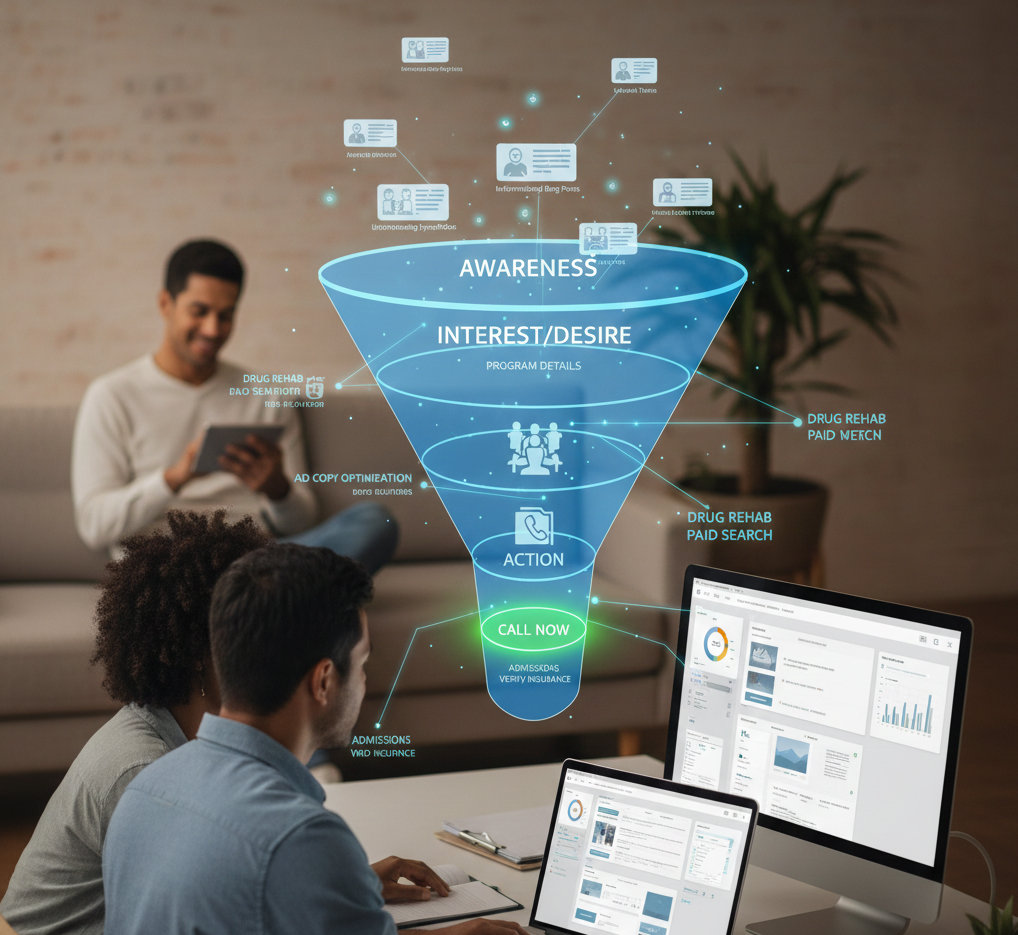
Beyond the 'Call Now' Ad: Using Funnel-Based Messaging to Nurture Drug Rehab PPC Leads

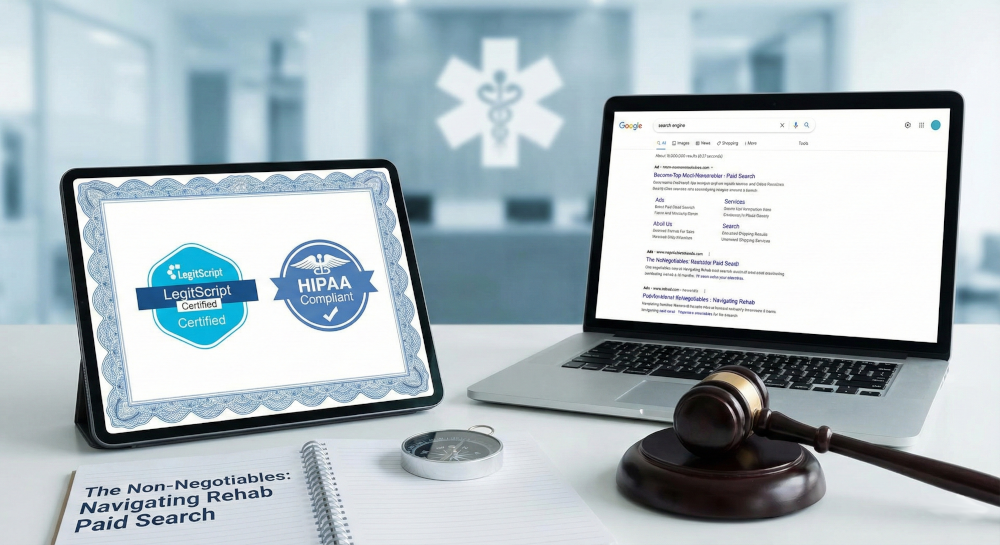
The Non-Negotiables: Navigating LegitScript and HIPAA Compliance for Drug Rehab Paid Search
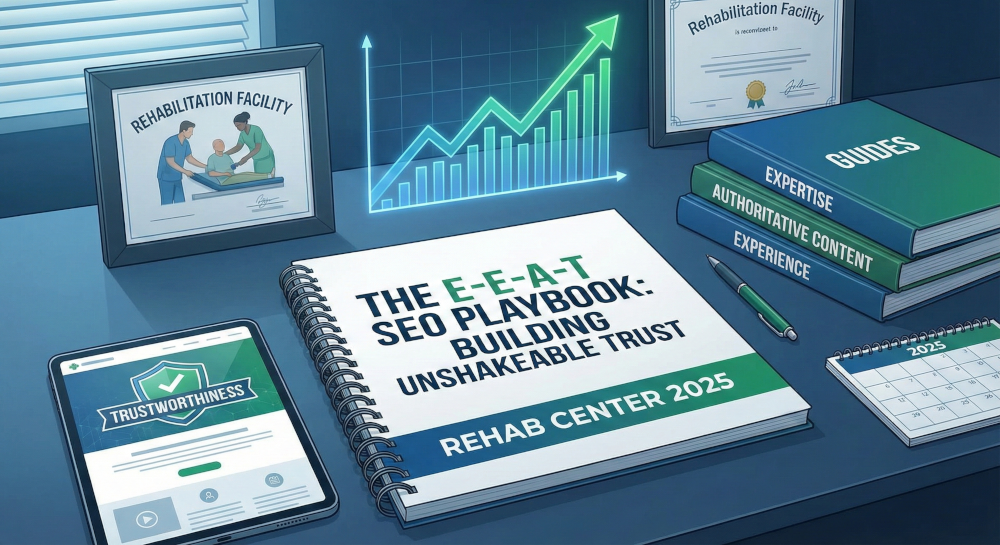
The E-E-A-T SEO Playbook: Building Unshakeable Trust for Your Rehab Center in 2025
Beyond the Bed Count: Marketing Client-Centered and Trauma-Informed Care

Harnessing AI for Hyper-Personalized Patient Outreach: A Treatment Center's Guide

Contact us today to get the conversation started!


